Meet Waymark, a journal app for your days outdoors — from a short walk in the park to a multi-day backcountry trek. It’s what Slopes is to my winters: a quiet notebook that keeps every trip in one place, with the tools to look more closely at each one.
It lands on the App Store in early August. If that sounds like your kind of app, have a look at the app page. The origin story is below.
A perfect storm
Waymark exists because 3 things happened at the same time.
-
RevenueCat is running Shipaton again this year — a two-month hackathon for builders to ship a new app. I decided to join, then went hunting for an idea.
-
Two separate friends asked me to recommend a trail for a day hike. I’ve been on about 100 hikes around Vancouver, and I still can’t pull a decent recommendation out of memory. I blog about my hikes, but that’s not something I can search at a trailhead. Then it clicked — this is the idea I’d been hunting for.
-
I’m late to the agentic coding party, but I finally gave Claude Code and the Xcode 27 beta a real try. That’s the reason a 3-week build could clear the quality bar I wanted. More on that below.
There you have it: a trigger, a motive, and a means.
What Waymark is not
At the outset, I decided what Waymark isn’t, to keep the scope in check.
It’s not a fitness tracker. I love how my Apple Watch works in the mountains, and how good it is at recording my workouts big and small. I don’t intend to rival its UI or what it does.
It’s not a navigation app. I personally love GaiaGPS, despite its recent push to make itself more social. It’s clean, responsive, and it just works out in the mountains.
It’s not a social network. I still look things up on AllTrails, especially for the most recent trail conditions reported by other hikers. As much as I resent its UI and UX, the app works fine on that front. (I’ve heard good things about its workout tracking and route navigation too — apparently it’s no longer the battery drain I remember from the COVID years.)
With those 3 out of the way, Waymark gets to be one thing: a personal notebook of hikes and camping trips. And I lean on that personal heavily — native iOS design, respect for your privacy, and iCloud sync with no account to sign up for.
Late to the agentic coding party
I’ve used ChatGPT, and later Claude.ai, for a long while. But it was only recently that I installed Claude Code on my Mac. Giving the model access to my code is what unlocked things: it takes a task from start to finish, and writes test cases for the next round of agentic work to check itself against — all without me copying and pasting between Xcode and Safari.
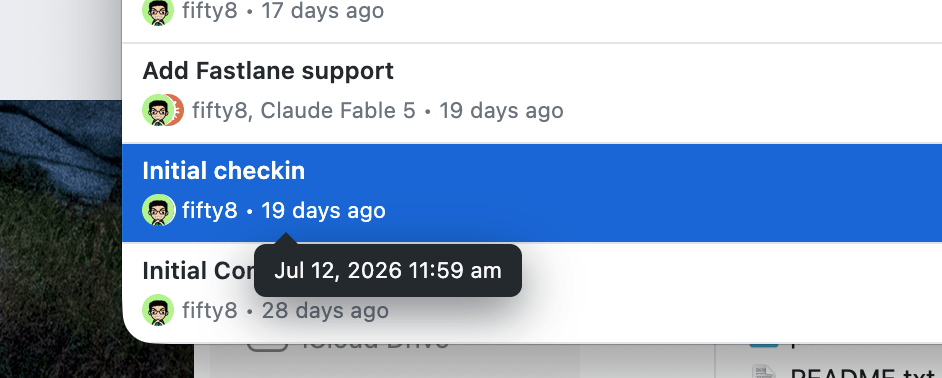
Claude Fable 5 took that a big step further. Even with my very limited experience of agentic coding, I could tell Fable understood the problem much more thoroughly, and that it takes a more systematic, top-down approach. It also rarely frustrates me the way Opus often does. I suspect that on pure Opus my token usage would have landed in the same place anyway, because of all the wasteful back-and-forth self-thinking. But that’s one person’s impression over 3 weeks, not a benchmark — please let me know if your experience differs.
Claude Code is the reason I could build Waymark with confidence, in 3 weeks. A lot of the heavy-lifting code — the things any user takes for granted, like raw route parsing and thinning, and GPX file importing — was Fable’s work. It also wrote many test cases so that the work in a future agentic session doesn’t break what’s working (or the agent might instead fix the test — either way, those test cases ask the agent to take responsibilities).
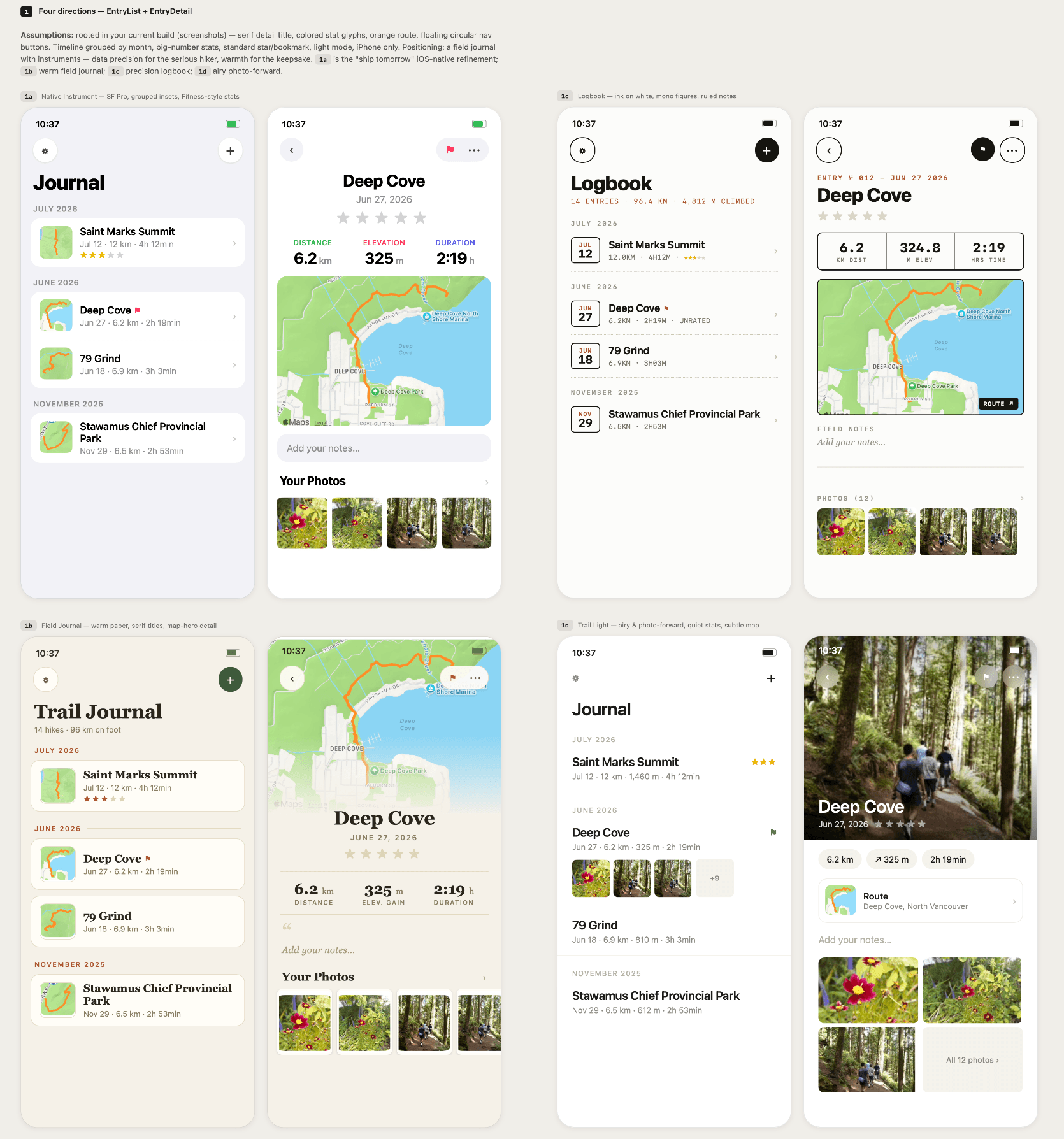
Claude Design earned its keep on the other half: the colour palette, the app’s voice, and the calls on final polish. It helped me explore possibilities and critique what I already had. I’d often just show it a screenshot and ask it to name the “tension” I could sense but not articulate, then suggest the fix.
Parting thoughts
Per Shipaton’s rules, Waymark ships in early August — early enough that there’s still a summer left to use it on.
As much as I’d like to have published build-in-public posts while the app took shape, it already took shape. So these will be post-mortems instead: essays and behind-the-scenes, after the fact.
More posts coming on how the RevenueCat side turned out — trial design, pricing, the parts of it that were new to me even after years of using RevenueCat. And on where AI genuinely helped, and where it just plain tripped over what “looks right” even means.
For now, the app page is up — go take a look. I’d love to hear what you think.
Until next time ✌️